
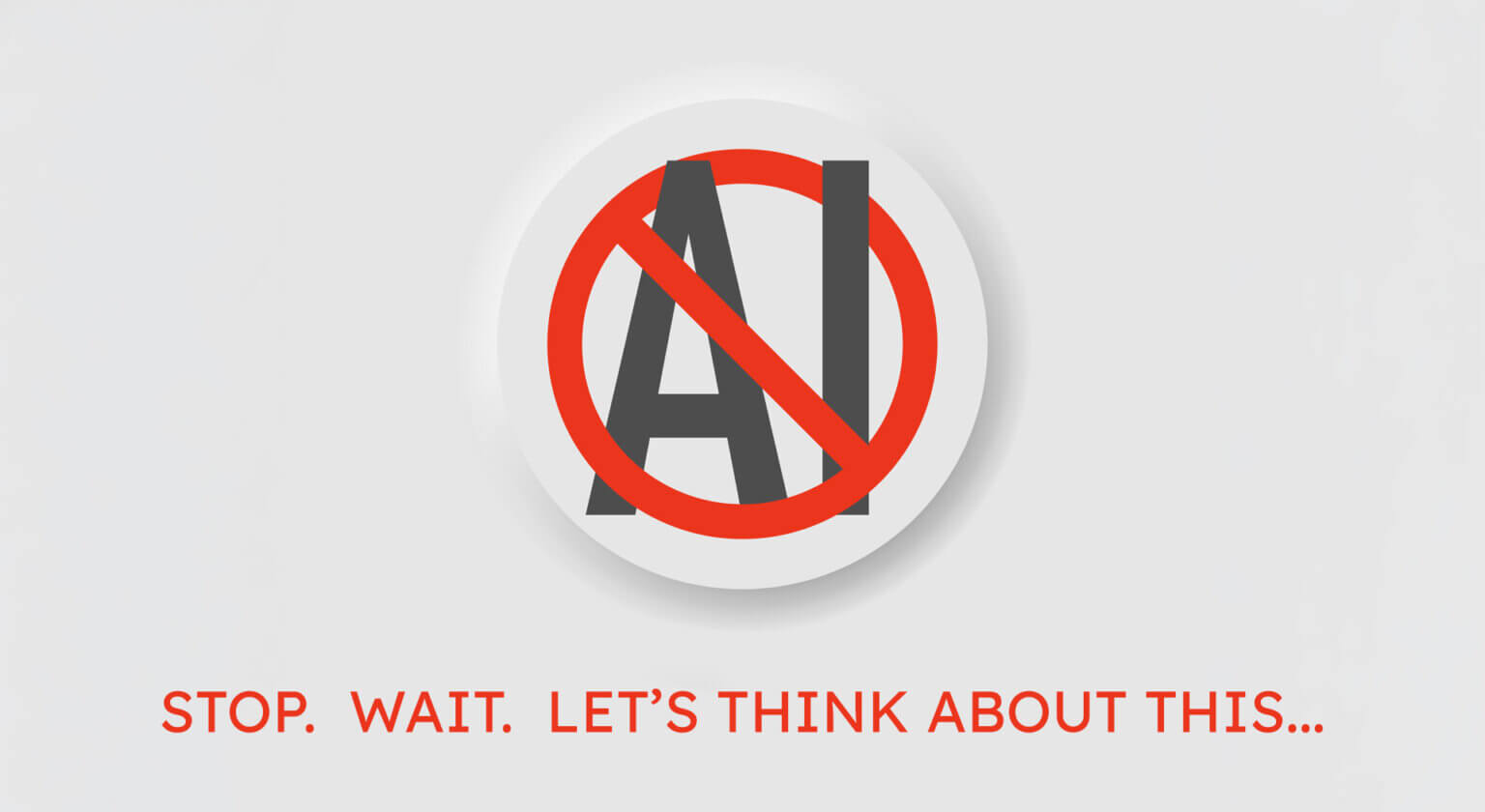
The Benefits of NOT using AI to build a Brand or E-commerce Website (And why an Experienced Web Design Agency still wins in 2026)
Artificial intelligence has transformed how websites are created. In 2026, AI-powered website builders promise speed, automation, and lower upfront costs. For startups and small businesses, that can sound appealing.
But when it comes to building a serious brand website or revenue-driven e-commerce platform, AI alone is not a strategy.
While AI can generate layouts, product descriptions, and even code, it cannot replace human strategy, brand insight, or conversion-focused thinking. In fact, there are real benefits to not rely solely on AI to build your website—especially if long-term growth, credibility, and performance matter to your business.
Here’s why working with an experienced web design agency remains the smarter investment.
1. Strategy Comes Before Design
AI tools build based on prompts and templates. They don’t conduct discovery sessions. They don’t analyze your competitors in context. They don’t align your website with long-term revenue goals.
An experienced agency begins with:
• Brand positioning
• Target audience research
• Competitive analysis
• SEO strategy
• Conversion mapping
• Content architecture
That strategic foundation determines how your website performs over time.
Without strategy, even a visually appealing website becomes a digital brochure instead of a growth engine.
For the past 20 years, Thinkhouse has designed and built brand-driven and e-commerce websites for both B2B and B2C clients. Our process focuses on aligning design decisions with measurable business objectives—not just generating pages quickly.
You can learn more about our strategic approach on the Thinkhouse Services Page.
2. Brand Identity Cannot Be Automated
AI works by referencing patterns. It generates designs based on what already exists. That often leads to websites that look polished—but generic.
Your brand is not generic.
Strong brands require:
• Unique visual language
• Intentional typography choices
• Thoughtful color psychology
• Consistent tone of voice
• Cohesive storytelling
AI can assemble components. It cannot interpret brand nuance, cultural context, or emotional positioning the way experienced designers and strategists can.
An agency builds a website that reflects who you are—not what an algorithm predicts.
When you review the Thinkhouse Portfolio Page, you’ll see diverse brand expressions across industries. That’s the result of human-led creative direction and strategic insight developed over two decades.
3. AI Doesn’t Understand Your Customer Journey
In e-commerce and B2B environments, the customer journey is complex.
For B2C ecommerce:
• Product discovery matters.
• Checkout friction kills conversions.
• Trust signals impact purchase decisions.
For B2B:
• Educational content influences buying cycles.
• Multiple stakeholders evaluate credibility.
• Lead funnels require nurturing touch-points.
AI builders create pages. Agencies design journeys.
Experienced teams map user flows intentionally—reducing friction, improving conversion rates, and aligning messaging with buyer intent.
This difference directly impacts revenue.
4. SEO in 2026 Requires Expertise
Search engines and AI-powered search platforms prioritize:
• Structured content hierarchy
• Page performance
• Accessibility compliance
• Mobile optimization
• Semantic clarity
• Meaningful engagement signals
AI tools may generate SEO-friendly copy, but they often lack the technical expertise to architect a website that supports long-term search visibility.
An experienced agency integrates:
• Technical SEO foundations
• Keyword strategy aligned to intent
• Content mapping
• Structured metadata
• Ongoing performance optimization
The result is a website designed not only to launch—but to rank and scale.
5. E-commerce Requires Custom Thinking
AI website builders can assemble a basic online store. But scaling e-commerce requires more than product listings.
Successful e-commerce platforms consider:
• Upsell and cross-sell logic
• Conversion rate optimization
• Cart abandonment reduction
• Analytics integration
• Payment gateway security
• Inventory scalability
• Performance under traffic spikes
These require customization and ongoing strategic oversight.
With 20 years of experience building e-commerce platforms for both B2B and B2C clients, Thinkhouse understands how to design stores that drive repeat purchases—not just transactions.
6. Human Collaboration Produces Better Outcomes
AI does not challenge assumptions. It does not ask strategic questions. It does not push back when messaging lacks clarity.
An experienced web design agency becomes a strategic partner.
They will ask:
• What differentiates you from competitors?
• What does success look like in 12–24 months?
• Where are customers dropping off?
• How can we reduce friction?
• How can we increase lifetime value?
These conversations shape the final product.
The difference between a template-based website and a strategically designed one often becomes clear within months of launch—especially when analyzing performance metrics.
7. AI Saves Time. Agencies Build Value.
AI tools are excellent for:
• Brainstorming
• Drafting content
• Speeding up wireframes
• Assisting development
And many agencies responsibly use AI internally to enhance efficiency.
But relying solely on AI shifts the burden of strategy, quality control, and long-term optimization onto the business owner.
When you hire an experienced agency, you’re not paying for pages—you’re investing in:
• Strategic insight
• Brand differentiation
• Technical precision
• Conversion optimization
• Ongoing partnership
You can explore Thinkhouse’s full capabilities and approach on their Home Page.
8. The Cost of “Cheap” Can Be Expensive
AI-built websites often look cost-effective initially. However, hidden costs emerge:
• Redesigns due to poor performance
• Lost conversions from weak UX
• Low search visibility
• Brand dilution
• Security vulnerabilities
• Platform limitations when scaling
Rebuilding a website properly later often costs more than investing in professional strategy upfront.
9. Long-Term Brand Growth Requires Intentional Design
Websites are not static assets anymore. They are evolving platforms.
As your business grows, your website must support:
• Expanded service offerings
• New product lines
• Increased traffic
• Deeper content libraries
• Marketing automation integrations
• Advanced analytics
An experienced agency builds with scalability in mind.
AI tools build for immediate output.
The difference matters.
The Bottom Line: AI Is a Tool—Not a Replacement
AI is powerful. It accelerates workflows and enhances creativity. But it cannot replace human strategy, brand intuition, and business alignment.
In 2026, businesses that treat their website as a strategic growth asset—not just a digital placeholder—consistently outperform competitors.
If your website is central to revenue, credibility, and long-term brand equity, partnering with an experienced agency remains the smarter path.
With two decades of experience designing and building brand and e-commerce websites for B2B and B2C clients, Thinkhouse understands how to translate strategy into performance.
Because while AI can build a website — Only experienced humans can build a brand.
If you’re ready to take your marketing to the next level, and explore our full range of branding, web design, and marketing services, contact us today to get started.



Questions?
Have a digital marketing question? Looking for some guidance? Send us a message and we'd be more than happy to help.
Sign up!
Join our mailing list for helpful insights.